


 : (+54911) 7213 6798
 Pinehurst, the Cradle of American Golf
Much like the Old Course at St. Andrews is to the legacy of golf in Scotland, many consider Pinehurst “the cradle” of golf in the USA. The “highlanders” of northern Scotland discovered this picturesque area in Moore County (North Carolina)—characterized by its rolling lands and sandy soil—to found Pinehurst and transform this small site into the epicenter of golf in the United States.
Pinehurst was founded in 1895 by James Walker Tufts—a Boston businessman—who purchased nearly 1,500 hectares of sandy land in North Carolina with the vision of creating a vacation resort and a health retreat for the winter. Shortly after its founding, in 1897, the first golf course was built, known as Pinehurst No. 1.
While the design of Pinehurst No. 1 began in 1898 with Dr. Leroy Culver and John Dunn Tucker, there was a determining factor in this late 19th-century history: Donald Ross. The great Scottish designer raised in Dornoch, north of Inverness, brought all his knowledge and experience to develop many of the courses in this area.
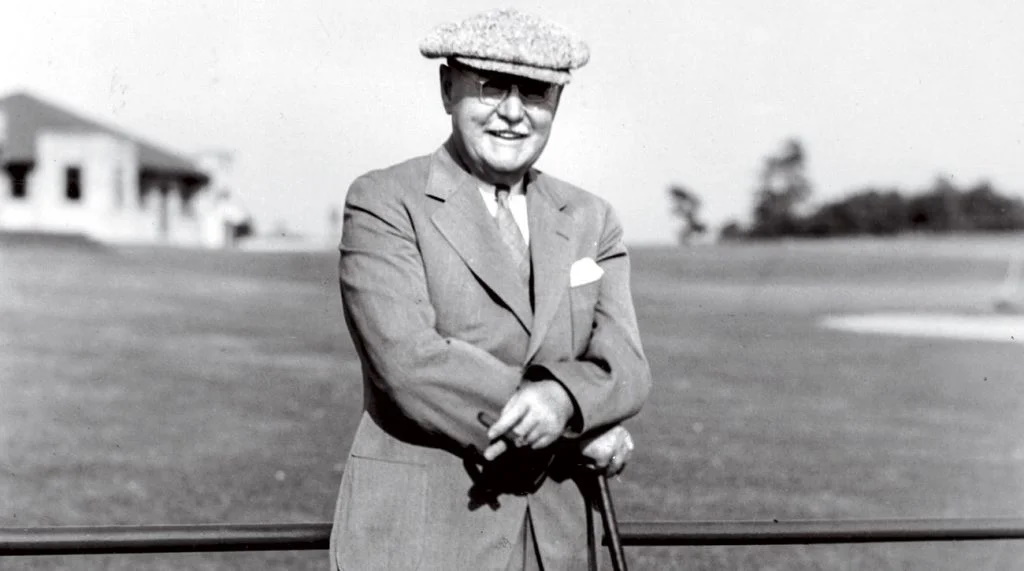 The legendary Donald Ross was a Greenkeeper and apprentice to Old Tom Morris at St. Andrews, Scotland.
Not content with the design of course No. 1, Tufts commissioned Ross to build a second course on the property. This is how Pinehurst No. 2 was born, which Ross would later call his "pet" and "the best test of championship golf I have ever designed."
Ross believed in designing courses that were challenging yet fair, and that integrated naturally into the existing landscape of the area. The Pinehurst courses reflect this philosophy, with meticulous attention to detail and an ability to use the natural topography of this part of North Carolina: pines, sand, and ridges.
In addition to Pinehurst No. 2, Donald Ross would design more than 400 courses in the USA, including gems like Seminole, Oak Hill, and Oakland Hills. However, No. 2 is the one he dedicated the most time and effort to, always modifying or perfecting some detail until his death in 1948.
Starting in the 70s, the course began to undergo modifications that caused it to lose its essence: the switch to Bermuda grass, the disappearance of its natural areas of sand, dunes, and native grasses that characterized it, added to the high rough left for major championships, made it look like a typical Florida course, eliminating everything Ross had planned in the beginning.
Thus, the Resort owners concluded it was time to rebuild the course. For this, they called Bill Coore and Ben Crenshaw, who had several minimalist designs to their credit that captured the spirit of golf's origins.
In 2011, Coore and Crenshaw meticulously restored the course, attempting to return it to its roots; that is, as close as possible to Ross's original design by reintroducing natural sand filled with native vegetation and widening the fairways to play as he designed them in the early 1900s.
Following the terrain, the course from tee to green is mostly flat and presents no major complications, but as in any Ross design, the greens are everything.
Course No. 2 is famous for its undulating and complex greens, which demand precision and skill from players. The lack of rough (eliminated in the last restoration) and the presence of wide areas of natural sand and native vegetation contribute to its unique character, emphasizing the need for precision on every shot.
At Wegolf, we have had the opportunity to play there on several occasions, and the locals say that only on 40% of the green's surface will the ball stay if it lands there—that is where you have to aim the approach, and not at the flag. And we were able to prove it!
The elevated, dome-shaped greens characteristic of Ross will test your strategy and also your patience. A shot that strays five yards right or left will simply roll off the green. The bunkers, deceptively placed around these challenging greens, require delicate and imaginative shots.
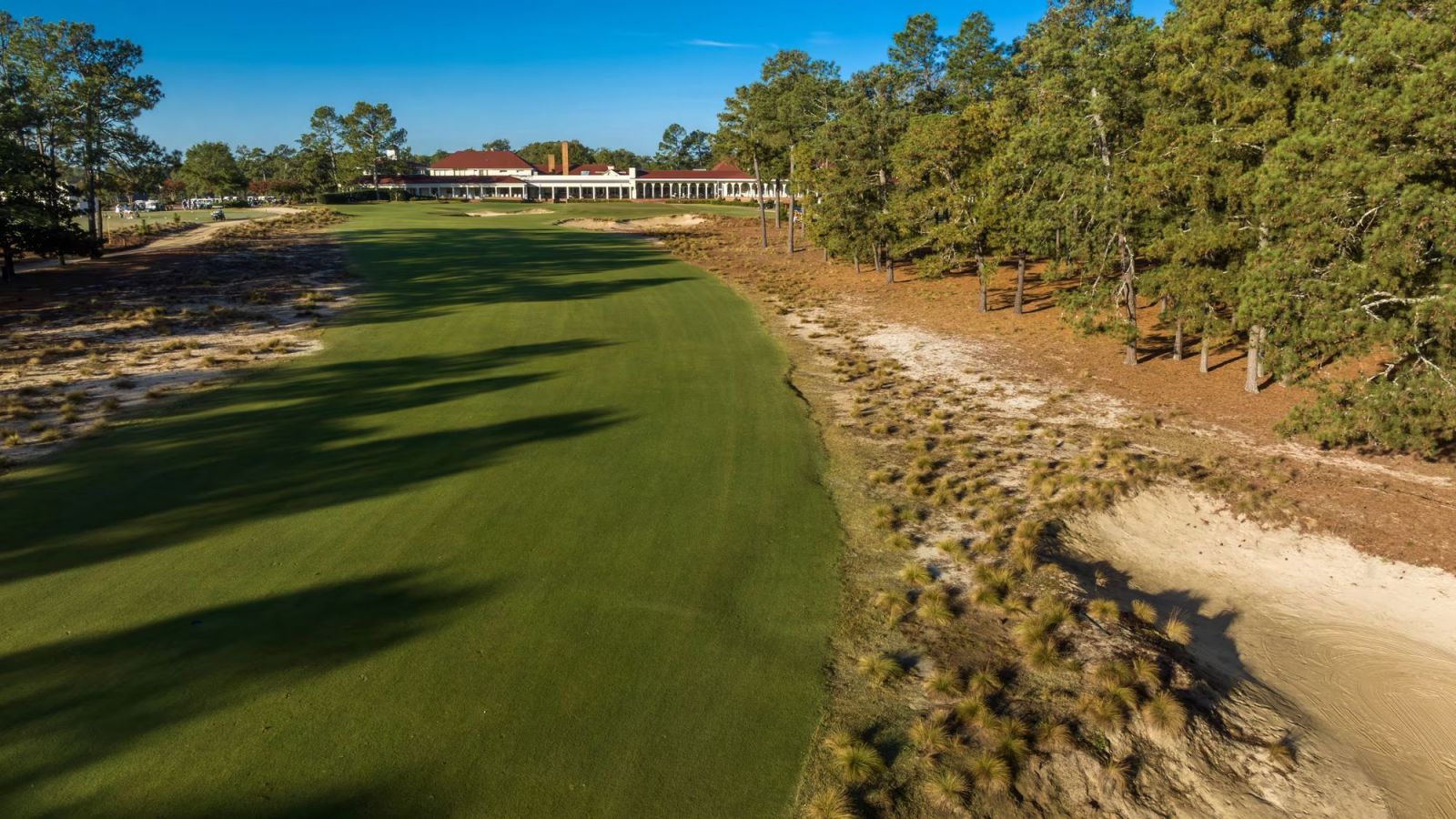 Aerial view of the 18th hole fairway.
Every hole on the course is designed to challenge and delight, maintaining the spirit of the game and honoring the vision of its creator genius.
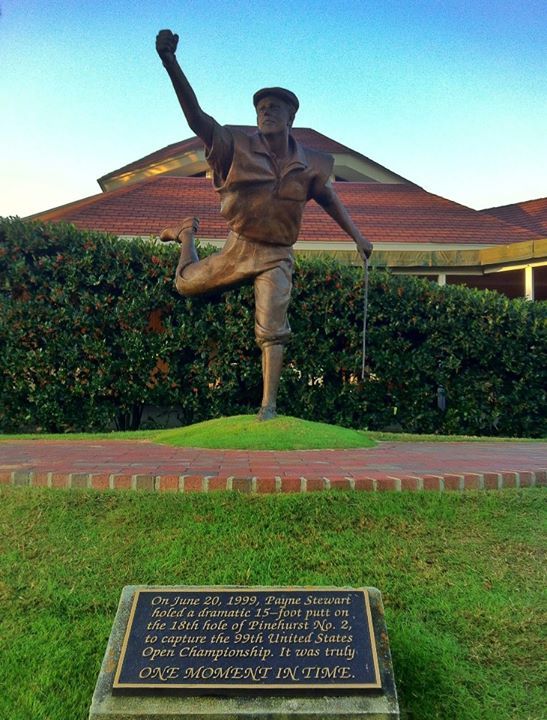
Course No. 2 at the Resort, which has just inaugurated its Course No. 10, is hosting the U.S. Open this week for the 4th time in its history: 2014, 2005, and the first time in 1999 with the remembered victory of Payne Stewart, today immortalized with a statue on the club terrace, visible when finishing the 18th green.
North Carolina
The history of golf in Pinehurst and much of the state of North Carolina is deeply intertwined with the influence of Donald Ross, whose vision and design have left an indelible mark on the world of golf. Pinehurst remains a living testament to his legacy, attracting golfers from all over the world.
Just a few kilometers from the course, there are other excellent courses worth visiting if you plan a golf trip to the area: Pine Needles, Mid Pines, Southern Pines, in addition to the other 9 golf courses located within the Resort.
Undoubtedly, North Carolina and especially the Pinehurst area are within our top 5 golf destinations in the United States. For the legacy, the quality of the courses in the area, the history, and because Pinehurst No. 2 is one of the few U.S. Open venues where you can play without being a club member, as most are private clubs that do not admit non-members.
Some interesting facts about Pinehurst
1. If you are lucky enough to go sometime, you should take advantage—besides playing No. 2 and at least one other course at the Resort—of playing the 9-hole par-3 course, "The Cradle." With lots of movement, short but difficult, it is a perfect complement to a morning round of golf; it even has a bar on the 7th green.
2. The Resort has a barbecue restaurant and a brewery, two blocks from the club—excellent! Take the opportunity to go and soak up the customs of this wonderful place.
3. The Resort features the largest putting green we have ever seen on a golf course, approximately 1,400 m2, with countless undulations and ridges throughout the terrain. Go well before your Tee Time to enjoy it!
4. The facilities and the club are bursting with memories of tradition wherever you look, such as the statue of Payne Stewart celebrating his putt on the 72nd hole of the 1999 U.S. Open, images of past U.S. and Women's U.S. Open winners, images of the Resort in its early days, etc.
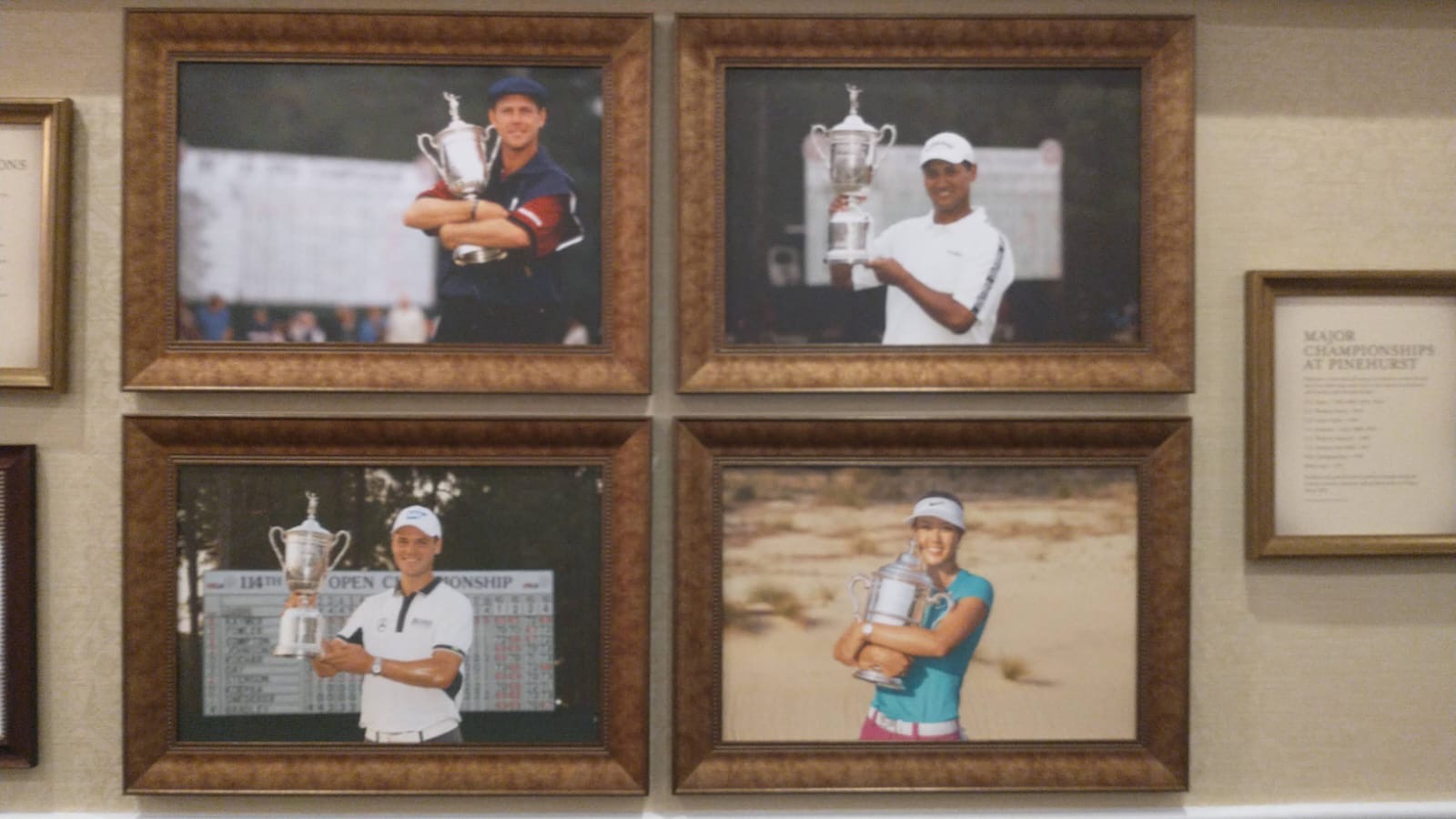
Payne Stewart (1999), Michael Campbell (2005), Martin Kaymer and Michelle Wie (2014). U.S. & U.S. Women's Open Champions at Pinehurst No. 2.
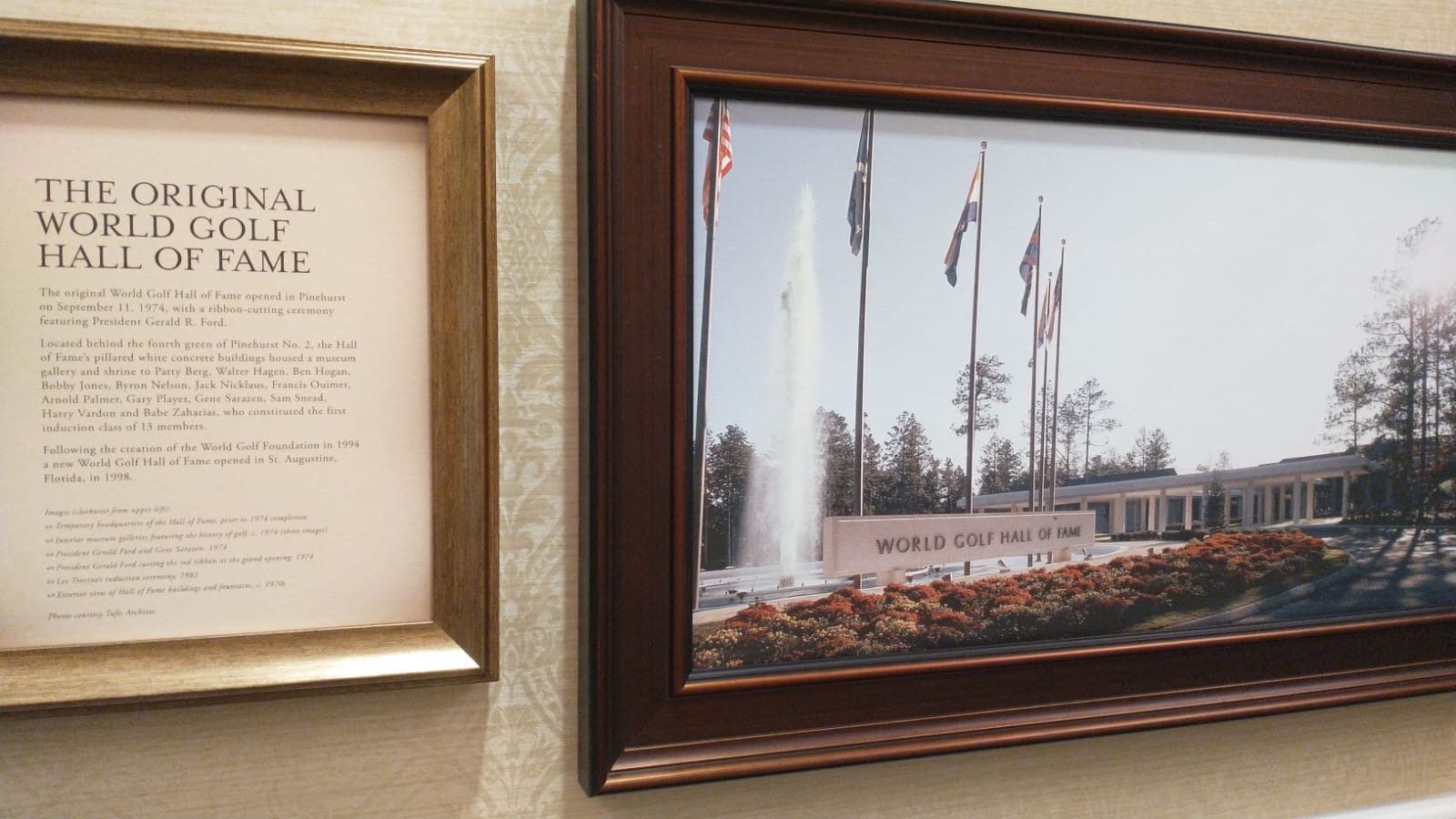
The first World Golf Hall of Fame was built in Pinehurst.
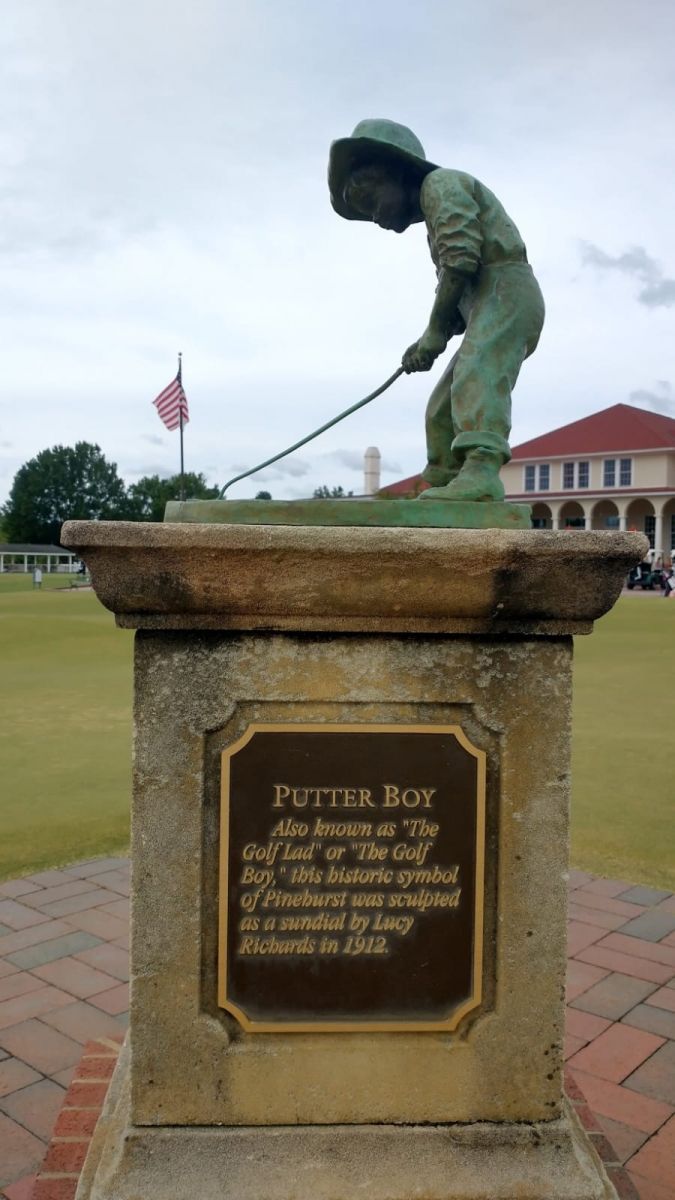
"Putter Boy," the iconic character of the Pinehurst logo.
Related posts


Related trips


Comments
Leave us your comment
Your email will not be published
I want to suscribe
Featured posts

About the History of Augusta National Golf Club

Top 5: Our Selection of Destinations for Your Next Golf Trip

The Open 151: From the Inside

Wegolf Top 10 Playable Golf Courses in the World

How can you play at Augusta National?

Top 10: The Best Places for a Golf Trip in the USA
