


 : (+54911) 7213 6798
 The History of "The Masters" Tournament
Seeking to provide a service to golf by organizing a tournament, Bobby Jones and Clifford Roberts decided to hold an annual event beginning in 1934. The final decision was made at a meeting in New York in the office of Augusta National member W. Alton Jones.
Roberts proposed that the event be called "The Masters Tournament," but Bobby Jones objected, thinking it was too presumptuous. The name "Augusta National Invitation Tournament" was adopted, a title used for five years until 1939, when Jones relented and the name was officially changed.
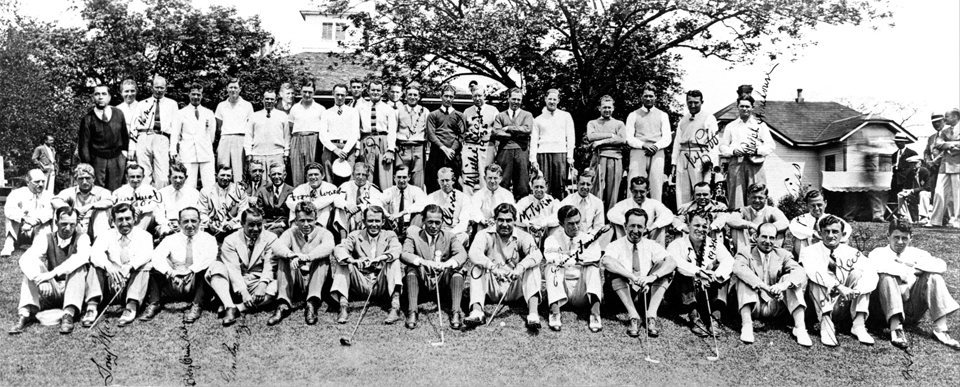 The 2nd Masters in 1935. Some figures who participated: Walter Hagen, Byron Nelson, Tommy Armour, Gene Sarazen & Bobby Jones, among others.
An early decision was whether Jones would play or serve as an official (he had already won the Open 3 times, the U.S. Open 4 times, the U.S. Amateur 5 times, and the British Amateur once). Jones preferred not to compete, but the Club members persuaded him to join the field. In the 12 Tournaments he played, his best result was 13th in 1934.
Many decisions made in the early days of the Tournament remain in effect today. These include 18 holes of play each day, from Thursday to Sunday, instead of the then-customary 36 holes on the third day; eliminating qualifying rounds; roping off fairways; and denying permission for anyone except the player and caddie to be in the playing area. A guide booklet is always provided for spectators (patrons), and commercialization of the tournament in any form was limited.
The first Tournament was held on March 22, 1934, and starting in 1940, the Masters was scheduled each year during the first full week of April. Horton Smith won that first Tournament, and in the fall of 1934, the nines were reversed. In 1935, Gene Sarazen hit "the shot heard 'round the world," carding an albatross on the par-5 15th hole, tying Craig Wood and forcing a playoff. Sarazen won the 36-hole playoff the next day by five strokes. In 1942, Byron Nelson defeated Ben Hogan 69-70 in an 18-hole playoff, and the Tournament was not played for the following three years, 1943, 1944, and 1945, during the war. To help the war effort, cattle and turkeys were raised on the grounds of Augusta National.
The 1950s included two victories by Ben Hogan and the first of four for Arnold Palmer. Palmer's 1958 victory began the tradition of Amen Corner. In 1960, the Par 3 Contest was started, and in 1965-66, Jack Nicklaus became the first Masters champion to successfully defend his title. During the 1970s, the two founders of the Masters passed away. Both Jones and Roberts left indelible impressions on the Masters and the world of golf.
In the following decade, Spain's Seve Ballesteros won twice and Tom Watson captured his second title. In 1986, at age 46, Nicklaus donned the Green Jacket for the sixth time. And in 1997, Tiger Woods broke the four-day tournament scoring record (270 strokes, winning by 12 over Tom Kite) that had stood for 32 years. At the 2001 Masters, Woods won his second Masters and his fourth consecutive Major (known as the Tiger Slam). He would later win his third and fourth Green Jackets in 2002 and 2005, respectively. In 2019, he would win his 5th Masters and, so far, his last Major.
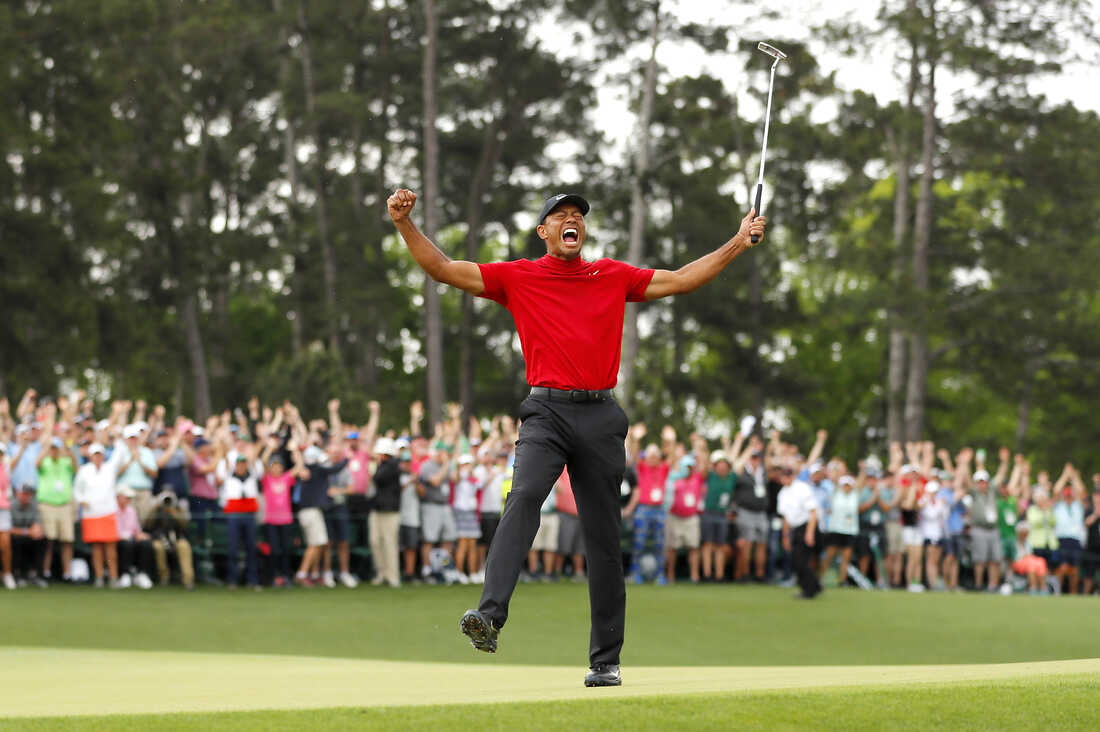 Tiger's emotion after winning a Major again after 11 years.
Phil Mickelson won his third Masters in 2010 to begin that decade, followed by victories by another left-hander, Bubba Watson, in 2012 and 2014, and the tournament's first Australian champion, Adam Scott, in 2013. In 2015, in only his second appearance, Jordan Spieth tied Tiger Woods' 72-hole scoring record set in 1997, winning his first Masters.

Phil Mickelson and his famous jump on the 18th green at ANGC.
The Masters is strictly an Invitational Tournament sponsored by a private organization. World rankings are the primary means for determining the invitation list, but eligibility under these regulations does not obligate the Tournament Committee to issue an invitation, nor does the lack of an invitation imply unsuitability of any kind.
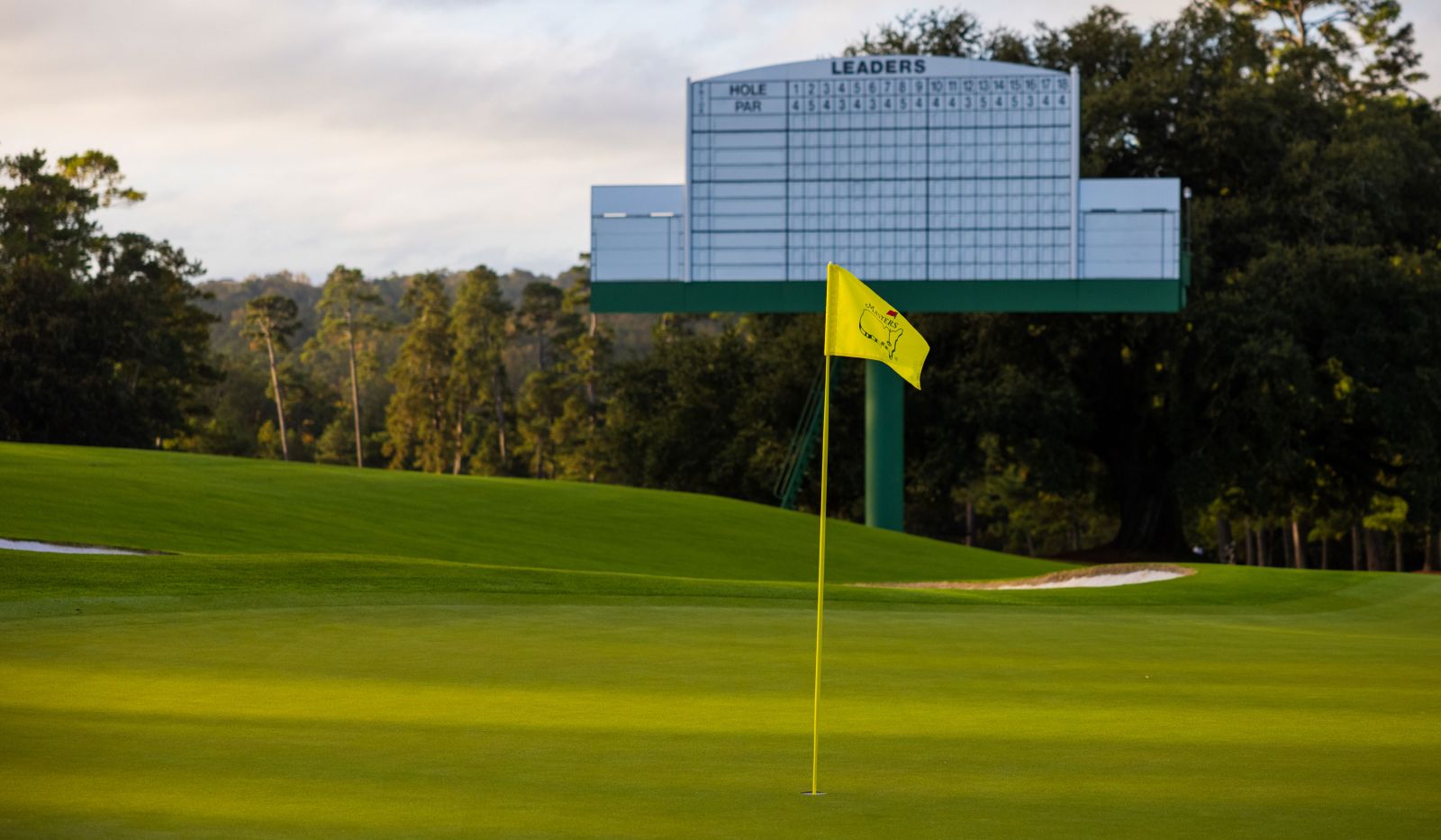 The view from the 18th green with the famous manual leaderboards still in use, which are the only way to follow scores within ANGC.
In preparation for the Tournament, the first consideration is to provide a first-class golf course in conditions as beautiful and near-perfect as effort can achieve; and secondly, to show the invited players every possible courtesy. The primary goal of the Masters is to stage a golf show that is enjoyable for everyone: members, patrons, invited players, and interested golfers in general. "The Masters" also has a mission to contribute in some way to the advancement of golf and its growth.
Related trips

Comments
-
Maria09/04/2024 00:02Muy interesantes todos estos datos. Muchas gracias! Creo que hace falta un dato curioso y es que en el 2020, debido a la pandemia del covid, el torneo se jugó en Noviembre de ese año y no como tradicionalmente se hace en abril
Leave us your comment
Your email will not be published
I want to suscribe
Featured posts

About the History of Augusta National Golf Club

Top 5: Our Selection of Destinations for Your Next Golf Trip

The Open 151: From the Inside

Wegolf Top 10 Playable Golf Courses in the World

How can you play at Augusta National?

Top 10: The Best Places for a Golf Trip in the USA
