


 : (+54911) 7213 6798
 The 5 Tips You Need to Organize Your Next Golf Trip
I have been fortunate enough to take many golf trips to different parts of the world. Most of these trips were with my group of friends—we are usually 8 golfers, and at times we have been even more. On other occasions, the trips were related to my role as Golf Manager at Wegolf, usually associated with major tournaments like The Players and the Presidents Cup, tournaments organized by us like Fourball Américas, or participation in international tourism fairs.
I participated in the setup and organization of all these trips, which took me to destinations like the United States (East and West coasts), the Dominican Republic (4 times already), Mexico, France, Italy, Spain, Portugal, Ireland, and Scotland (among others). In accumulating so many miles, destinations, and courses, I had my hits and my misses. These lessons are what I try to use every day when building itineraries for the Wegolfers who contact us daily.
I thought it might be useful to share some of these lessons learned over the years to serve as a "guide" for planning a golf trip. At least the main points to consider and the order in which these definitions should happen.
1. The Date of the Trip
This, I believe, is the first thing to define. When defining a trip with a group (whether friends or couples), you must take all schedules into account. And by "schedules," I mean that people have various matters occupying them: work, family, birthdays, anniversaries, baptisms, weddings, other trips (family or work), etc.

All these issues compromise our schedules. We cannot take a week off without considering these matters. On top of that, you have to find a week (or however long the trip lasts) in which everyone participating in the trip is free. It is no easy task, I assure you!
But once the trip date is defined, only then can you move to the next step of organization. Which brings me to the next point, which goes hand in hand with the date.
2. Trip Destination
Another essential element, obviously. And an element that can be conditioned by the first consideration: the date. Why? Because there are destinations where the date is a deciding factor.

For example, destinations like Scotland or Ireland are only recommended from April to September. Or destinations like Arizona and Miami are not recommended for June, July, and August. There are also destinations that are more or less expensive depending on the time of year you go. Rates can change significantly.
If dates are flexible, some groups may have the destination defined from the start—whether because it is a bucket list item, a specific event is being held there, or because there is a specific course the group seeks to play.
Another way to define the destination is thinking about what type of trip the group wants. Are you looking for a warm destination? Do you want to play with carts/buggies? Is the group interested in sightseeing? Is it a group of friends or couples? Do all members play golf? If not, is there an activity for the non-golfer? Are you only looking to play historic or famous courses, or is that not a priority?
In short, several questions each group must ask to define a destination. Every group is different, and fortunately, there are destinations for everyone. Scotland is different from Spain, Spain is different from the Dominican Republic, the Dominican Republic is different from Pebble Beach, and so on. There is something for every taste and trips for any date of the year.
3. Courses to Play
Having defined the date and destination, it is time to choose the courses to be included in the itinerary.
There are trips built around emblematic courses because of their history, because we see them every year on the PGA Tour, or because major championships like a Major, Ryder Cup, or Presidents Cup were played there. I call them "chips," because they are like collectibles.
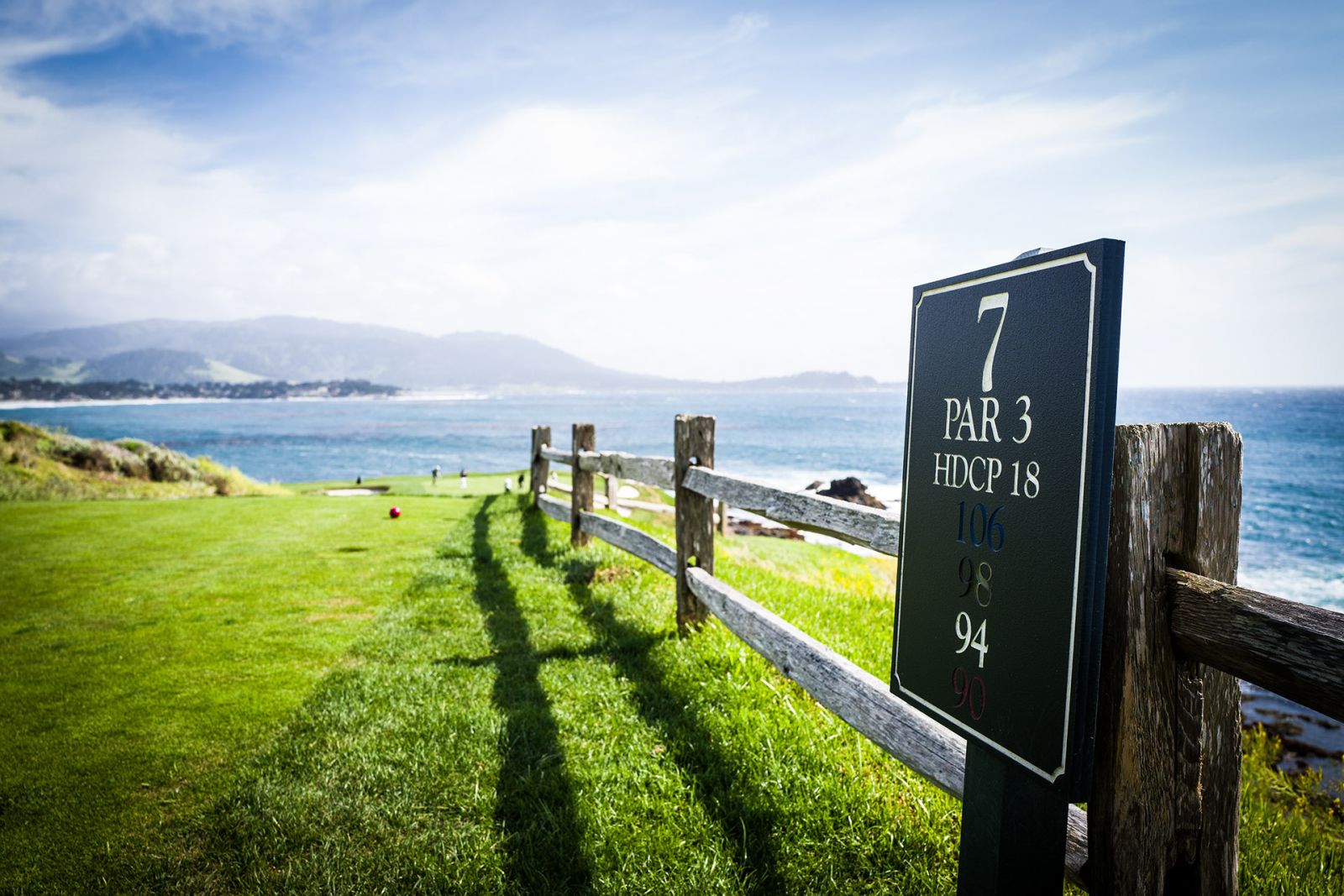 Pebble Beach, on the West Coast of the US, is one of those "chip" courses and one of the most desired by all golfers.
In some groups, the courses are not necessarily the priority. The destination is what matters most, or even the accommodation. The enjoyment for some groups happens after the round—getting together for a meal, playing cards, or whatever. In those cases, the specific course played that day is less important when defining the itinerary.
Of course, wanting to include several "chip" courses will make the trip more expensive. But you can also do a mix and build a trip that includes different categories of courses.
In any case, a recommendation: when packing your suitcase, leave room for purchases you will make in the pro shops. It doesn't matter if the courses are famous or if you have never heard of them; you will likely see a shirt, a sweater, or a cap you will love. These are great trip mementos.
4. Type of Accommodation
This is not a minor detail. Not because one type is better than another, but because different groups have different preferences.
In most destinations, we can offer hotels of different categories, golf villas, apartments, and/or houses.
Some groups prefer the convenience of a hotel, with daily cleaning where they "don't lift a finger." They look for absolute comfort, and many even prefer their own room.
Other groups prefer a house. This implies more "work," as there usually isn't daily cleaning and you have to prepare meals, but houses provide a sense of "camaraderie." You share more in common areas: the kitchen, the living room, or the garden.
Villas and apartments are a middle ground, offering common spaces to share, especially for smaller groups, and usually, you can arrange for daily cleaning.
5. Competition Format
We take trips to see a destination, enjoy, rest, and escape the routine. But let's be honest: golfers are competitive by nature. I don't know of a single golf trip where a competition wasn't played among the participants.
There doesn't necessarily have to be money involved. It could be a ball marker from the pro shop, a sleeve of balls, a trophy, or just bragging rights. But we love to compete. Point.
So, plan the format in advance. It could be individual, team-based, or both. There are several ways to shape the competition depending on the level of the players. Will you play Medal Play? Match Play? Stableford? Fourball? A combination? You can even copy the Ryder Cup or Presidents Cup format.
It is important that everyone is on equal footing and that, if possible, everyone has a chance to win until the last day. This keeps everyone engaged.
That said: don't take it too seriously. Winning or losing this competition doesn't change anything. It is the excuse to spend more time with the group. And we aren't good enough to get angry if we play poorly, nor to brag too much if we play well one day!
These were some of the lessons learned over the years. I hope some of this helps you when building your golf trips. At Wegolf, we use our experience in the destinations we promote to build the best possible itinerary for you.
We know not everyone is looking for the same thing. It is important for us to listen to you and propose a trip you can enjoy to the fullest. Don't waste our 20 years of experience building trips!
Sincerely, Max Hawes.
Comments
Leave us your comment
Your email will not be published
I want to suscribe
Featured posts

About the History of Augusta National Golf Club

Top 5: Our Selection of Destinations for Your Next Golf Trip

The Open 151: From the Inside

Wegolf Top 10 Playable Golf Courses in the World

How can you play at Augusta National?

Top 10: The Best Places for a Golf Trip in the USA
